


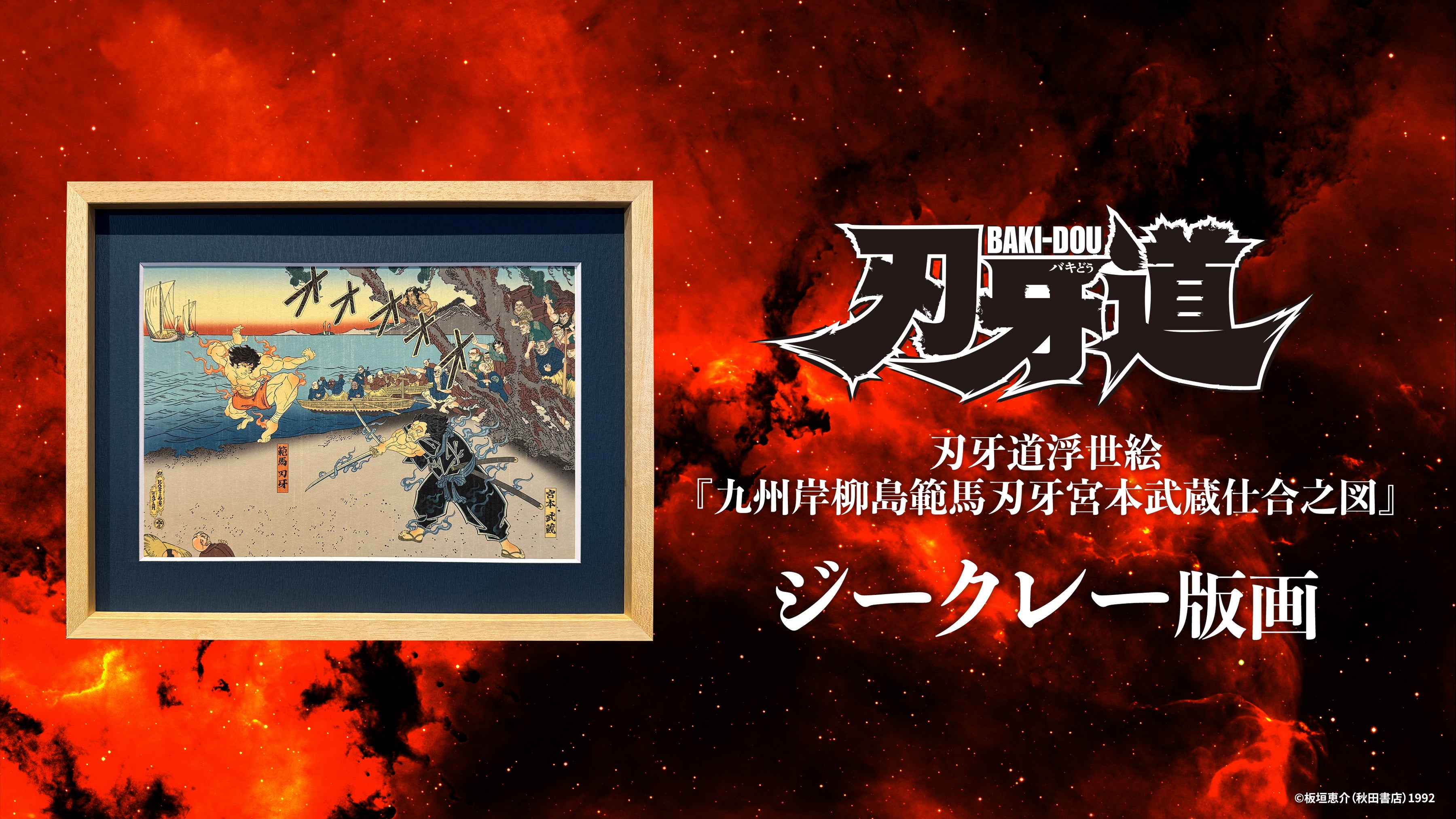
New release!
Hanma Baki Ukiyo-e woodblock print
Pre-orders will be released simultaneously worldwide from 12:00 Japan time on Friday, September 25, 2026.


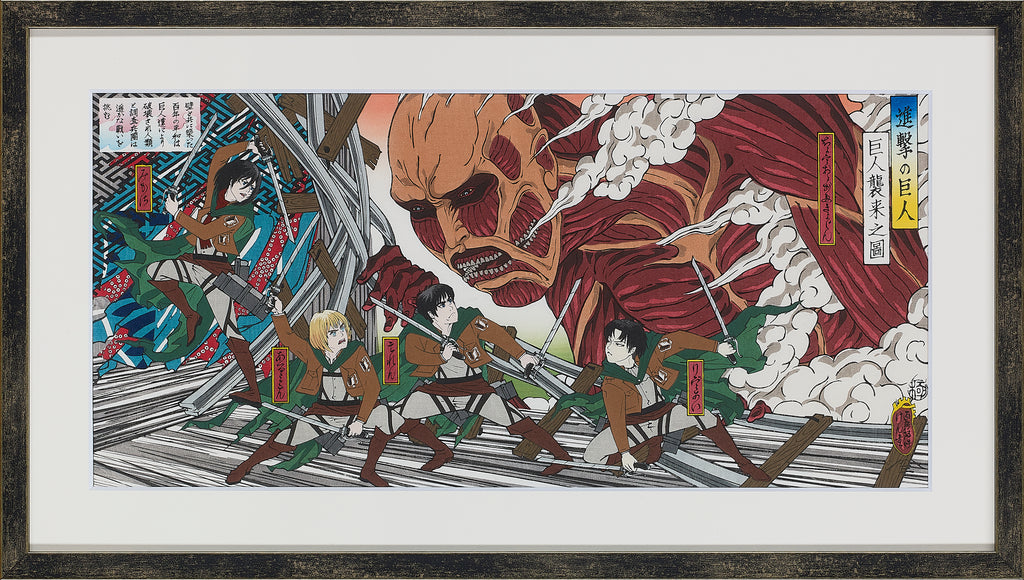

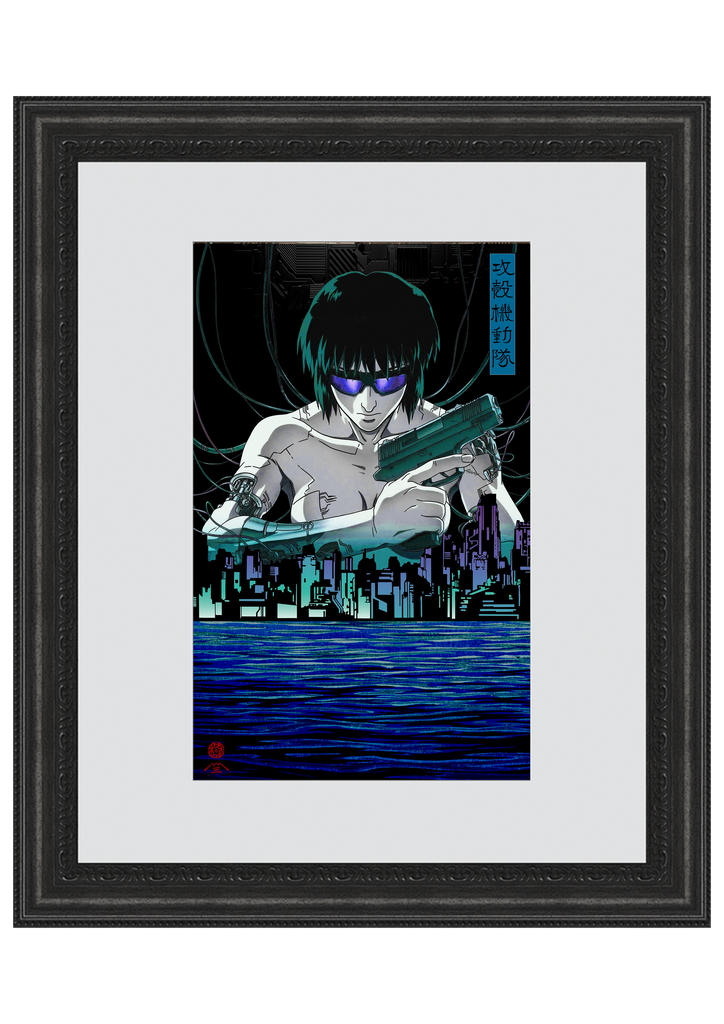

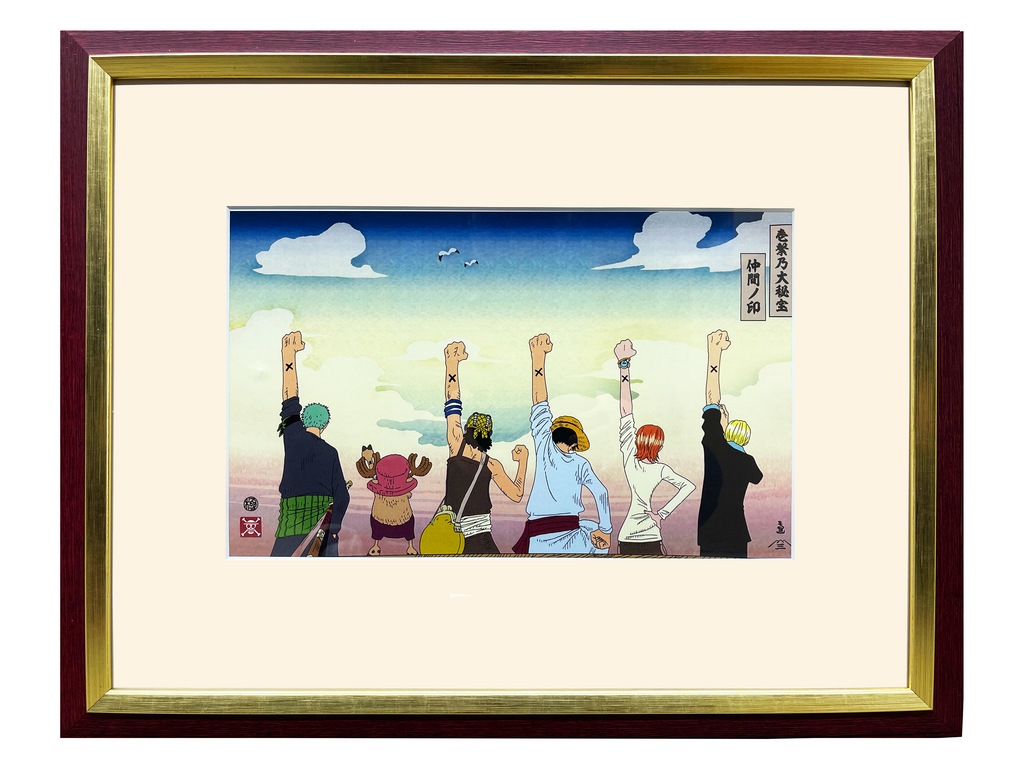

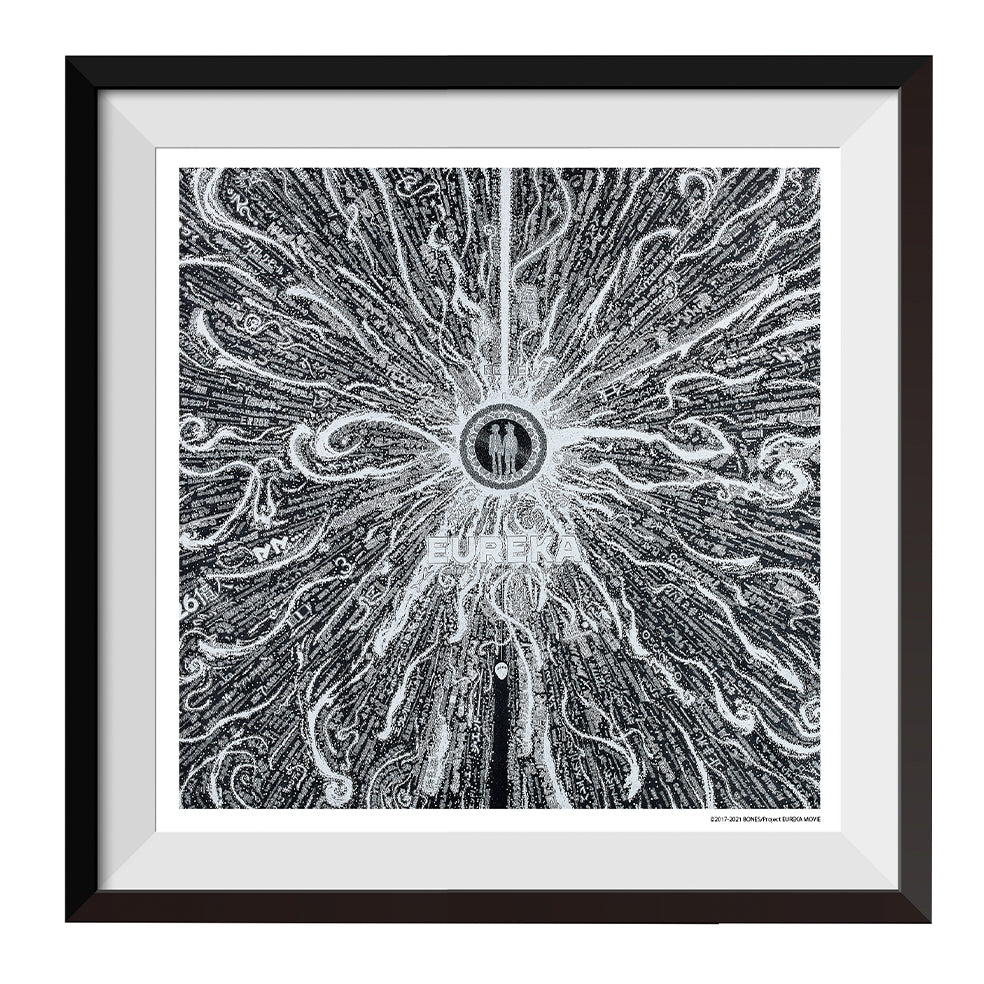

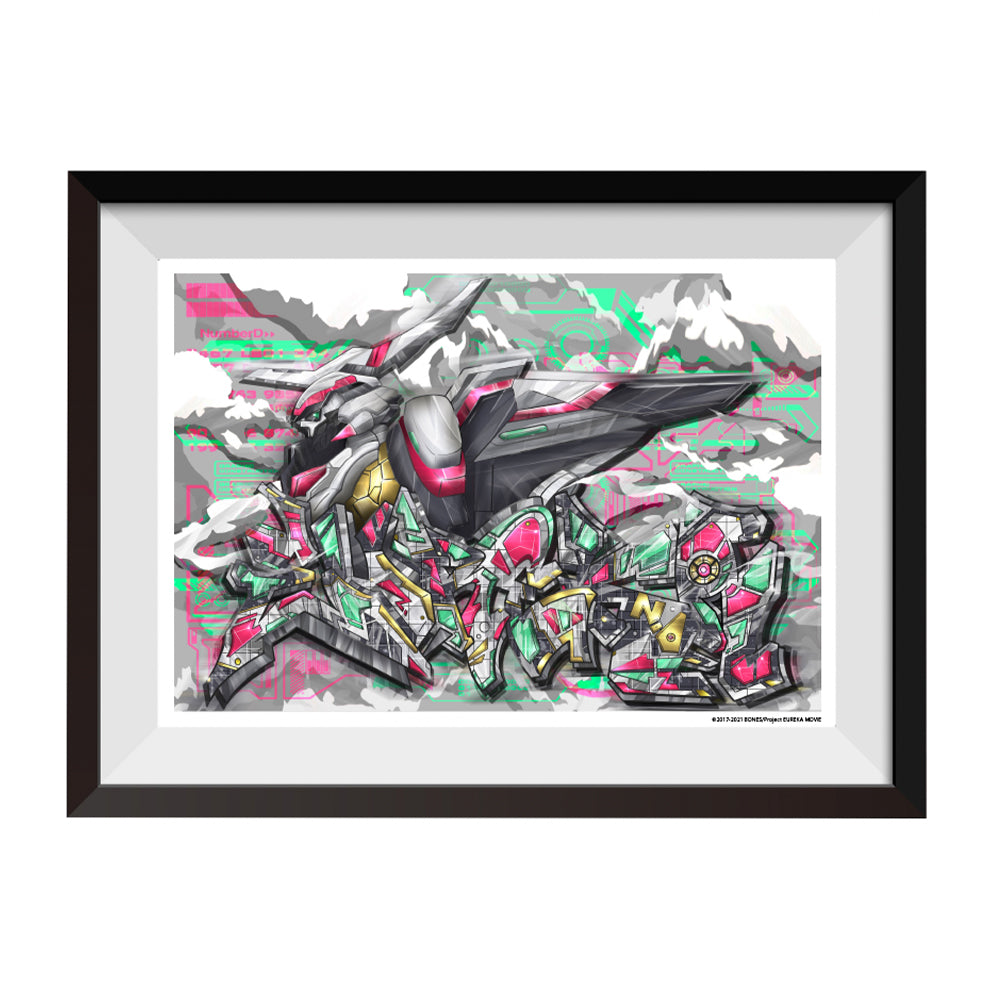

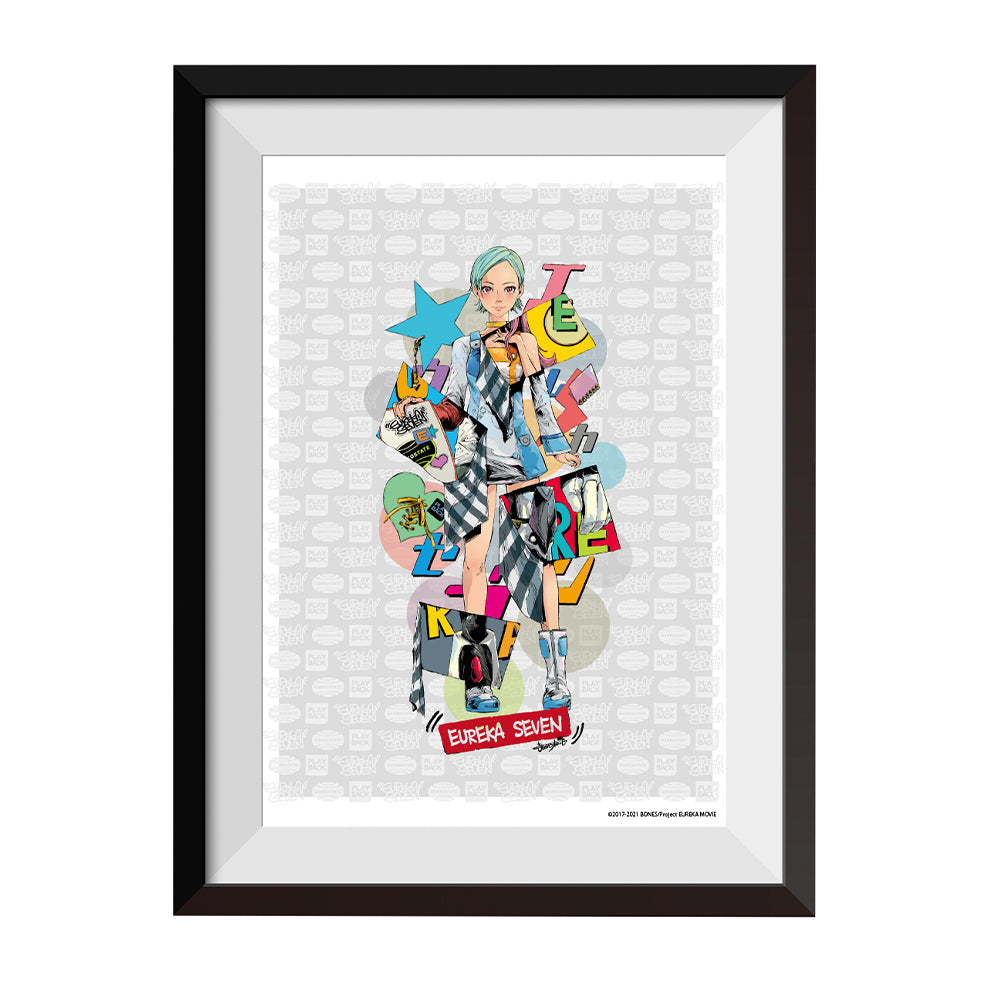

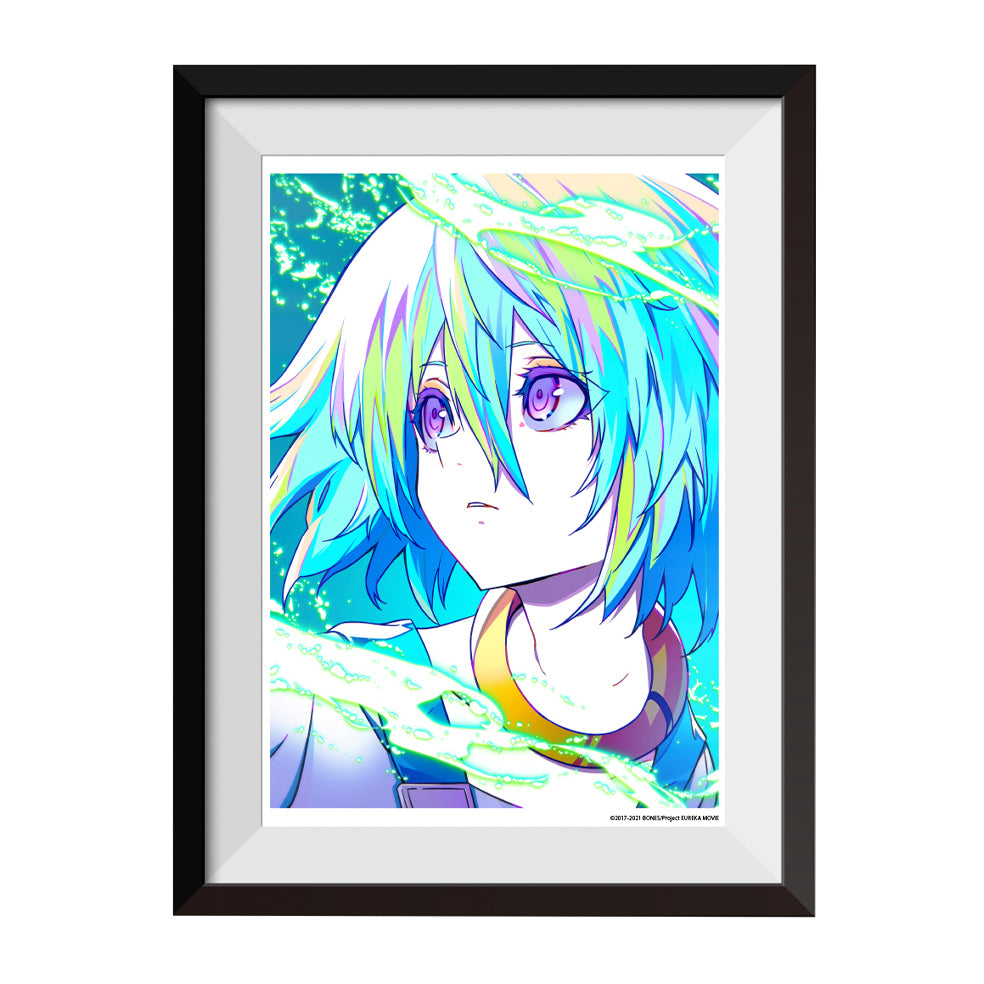


Masterful Craftsmanship Nurtured Through 200 Years of Tradition
In the 19th century, the wave of Japonisme that spread across Europe, particularly in France, had a profound influence on Impressionist painters of the time such as Van Gogh, Monet, and Toulouse-Lautrec. They were astonished by the detailed depictions of Japanese daily life and customs, unlike anything they had seen before.
Ukiyo-e is a traditional Japanese art form that has been passed down for over 200 years, born from the unified collaboration of the artist, woodblock carver, and printer, and created using hand-made washi paper. It is a cultural heritage and technical tradition Japan can take pride in.
What we call the contemporary form of ukiyo-e, “NEO UKIYO-E”, is the result of combining this master craftsmanship with modern creativity.
Just as we are captivated today by ukiyo-e works from the Edo period 200 years ago,
we hope to leave behind works that will captivate people living 200 years into the future.

Echizen washi craftsman / Living National Treasure, 9th-generation Ichibē Iwano
Born in Imadate Town, Fukui Prefecture (now Echizen City).
He studied traditional Echizen hōsho papermaking techniques under the strict guidance of his father, the 8th-generation Ichibē Iwano (holder of the Important Intangible Cultural Property “Echizen Hōsho”), and his uncle, Masao Iwano.
The only craftsman dedicated exclusively to deeply researching traditional techniques and producing refined, high-quality Echizen hōsho.
His highest-quality washi is recognized as the world’s finest restoration paper and has been supplied to the Louvre Museum.

Washi Paper
We use the highest-grade Echizen nama-suki hōsho paper, hand-made by Living National Treasure Ichibē Iwano. Among Echizen washi, only around three papermakers nationwide are capable of producing nama-suki hōsho.
Echizen (Fukui Prefecture) nama-suki hōsho has a history of more than 1,500 years, and its exceptional quality has long been recognized, with the paper historically used for official documents.
Even today, Echizen nama-suki hōsho is produced entirely by hand, preserving traditional techniques through an extraordinarily time-consuming process.
It is highly regarded by many printmakers for its ability to withstand over 300 printing passes, and it is said that Picasso also used this hōsho paper.

Carving
Ukiyo-e woodblock prints are made using single, solid planks of wild mountain cherry wood. Cherry wood has a fine grain and excellent durability, making it an ideal material for woodblock printing.
First, a cloth is laid over a forward-tilted worktable and the woodblock is secured in place. A design sketch, transferred onto thin washi paper, is then pasted onto the block in reverse. The block is carefully carved by following the visible ink lines through the paper, cutting into the surface with carving tools.

For detailed carving, a flask filled with water is placed in front of a light bulb to concentrate the light and prevent shadows cast by the carving tools.
In ukiyo-e woodblock printing, a key block (carved only with the ink outlines) is first used. The outlines are printed alone to create a proof print, onto which the artist adds color indications. Following these color guides, the carver then creates separate woodblocks for each color.

Printing
To withstand the dozens of layered printing passes using horsehair brushes and to produce the depth unique to woodblock prints, nama-suki hōsho (washi paper) is indispensable.
The dōsa-sized washi is lightly moistened with water, and printing begins in order from the lightest colors.

Registration marks are carved into the woodblock: a kagi-kentō at the lower right and a hiki-tsuke kentō at the front. The printer aligns the paper to these marks and prints successive layers of color. A skilled printer can place the paper correctly in a single motion, no matter how many sheets are printed.
Perfectly aligning numerous colors from multiple woodblocks to produce the work envisioned by the artist can be described as the pinnacle of craftsmanship.